

Healthcare organizations handle some of the most sensitive personal information in existence, from medical diagnoses to treatment histories and payment records. Since 1996, the Health Insurance Portability and Accountability Act has fundamentally transformed how these organizations protect patient privacy while enabling essential healthcare operations and public health activities.
Understanding hipaa requirements isn’t just about avoiding penalties—it’s about building patient trust, ensuring proper healthcare delivery, and maintaining the integrity of our health care system. Whether you’re a healthcare provider, work for a healthcare organization, or serve as a business associate, this comprehensive guide will equip you with the knowledge needed to navigate the complex landscape of healthcare privacy and security compliance.

What is HIPAA
The Health Insurance Portability and Accountability Act was enacted on August 21, 1996, establishing federal standards for protecting sensitive patient health information. Originally designed to address health insurance portability concerns when workers changed jobs, hipaa evolved into the cornerstone of healthcare privacy protection in the United States.
The law consists of five distinct titles, with Title II containing the most recognized privacy and security provisions that healthcare providers and other covered entities must follow today. Title I focuses on health insurance portability, ensuring individuals can maintain health insurance coverage when transitioning between jobs or facing employment changes. Meanwhile, the remaining titles address various administrative, tax, and enforcement-related provisions that support the law’s broader healthcare reform objectives.
HIPAA applies to covered entities including healthcare providers who conduct electronic transactions, health plans with 50 or more participants, and healthcare clearinghouses that process health information. Additionally, business associates—third-party vendors that handle protected health information on behalf of covered entities—must also comply with specific hipaa regulations and security requirements.
The primary goal extends beyond simple privacy protection. HIPAA aims to standardize healthcare administrative processes, reduce costs through electronic transaction efficiencies, and ensure patients maintain control over their individually identifiable health information while enabling necessary healthcare operations and public health activities.
HIPAA Privacy Rule
Effective April 14, 2003, the Privacy Rule establishes comprehensive national standards for protecting individually identifiable health information. This rule represents the foundation of patient privacy rights and healthcare provider responsibilities under federal law.
The Privacy Rule requires covered entities to obtain patient authorization before using or disclosing protected health information, with specific exceptions for treatment, payment, and healthcare operations. These exceptions, often referred to as TPO, allow healthcare providers to share necessary information for direct patient care, billing processes, and essential administrative functions without individual consent.
Patients possess significant rights under the Privacy Rule, including access to their medical records, the ability to request amendments to incorrect information, and receiving an accounting of disclosures made for purposes beyond treatment, payment, and operations. Healthcare organizations must provide patients with a Notice of Privacy Practices explaining how their information may be used and disclosed.
The minimum necessary standard requires covered entities to limit uses and disclosures to only the minimum amount of protected health information needed to accomplish the intended purpose. This principle applies to most situations except treatment activities, disclosures to patients themselves, and uses authorized by patients.
Healthcare organizations must implement written privacy policies and procedures, designate a privacy officer responsible for developing and implementing privacy practices, and train all workforce members on privacy protection requirements. These administrative safeguards ensure consistent application of privacy protections across the organization.
HIPAA Security Rule
Effective April 21, 2005, the Security Rule specifically protects electronic protected health information through comprehensive safeguards addressing the confidentiality, integrity, and availability of ePHI. This rule complements the Privacy Rule by focusing exclusively on electronic data security requirements.
The Security Rule requires implementation of three categories of safeguards: administrative, physical, and technical. Each category addresses different aspects of information security while working together to create a comprehensive protective framework for sensitive health information.
Administrative Safeguards
Administrative safeguards include conducting regular security risk assessments to identify vulnerabilities in electronic protected health information handling and storage systems. Healthcare organizations must assign security responsibilities to designated personnel, implement workforce training programs covering security awareness and procedures, and establish information access management controls.
Additional administrative requirements include implementing procedures for authorizing access to electronic protected health information, establishing workforce training programs, creating information access management protocols, and developing incident response procedures. Organizations must also maintain security risk management programs and implement proper sanctions for workforce members who violate security policies.
Physical Safeguards
Physical safeguards involve facility access controls that limit physical access to electronic information systems and the facilities where they’re housed. These controls include procedures for authorizing access, establishing workstation use restrictions, and implementing device and media controls for hardware containing electronic protected health information.
Healthcare organizations must protect workstations from unauthorized access while ensuring authorized users can perform their duties effectively. This includes controlling access to ePHI through workstation configuration, monitoring workstation use, and implementing policies for device placement within facilities.
Device and media controls address the receipt and removal of hardware and electronic media containing ePHI, including procedures for disposal, reuse, and transport of electronic devices. Organizations must maintain inventory records and implement secure disposal methods for devices containing sensitive health information.
Technical Safeguards
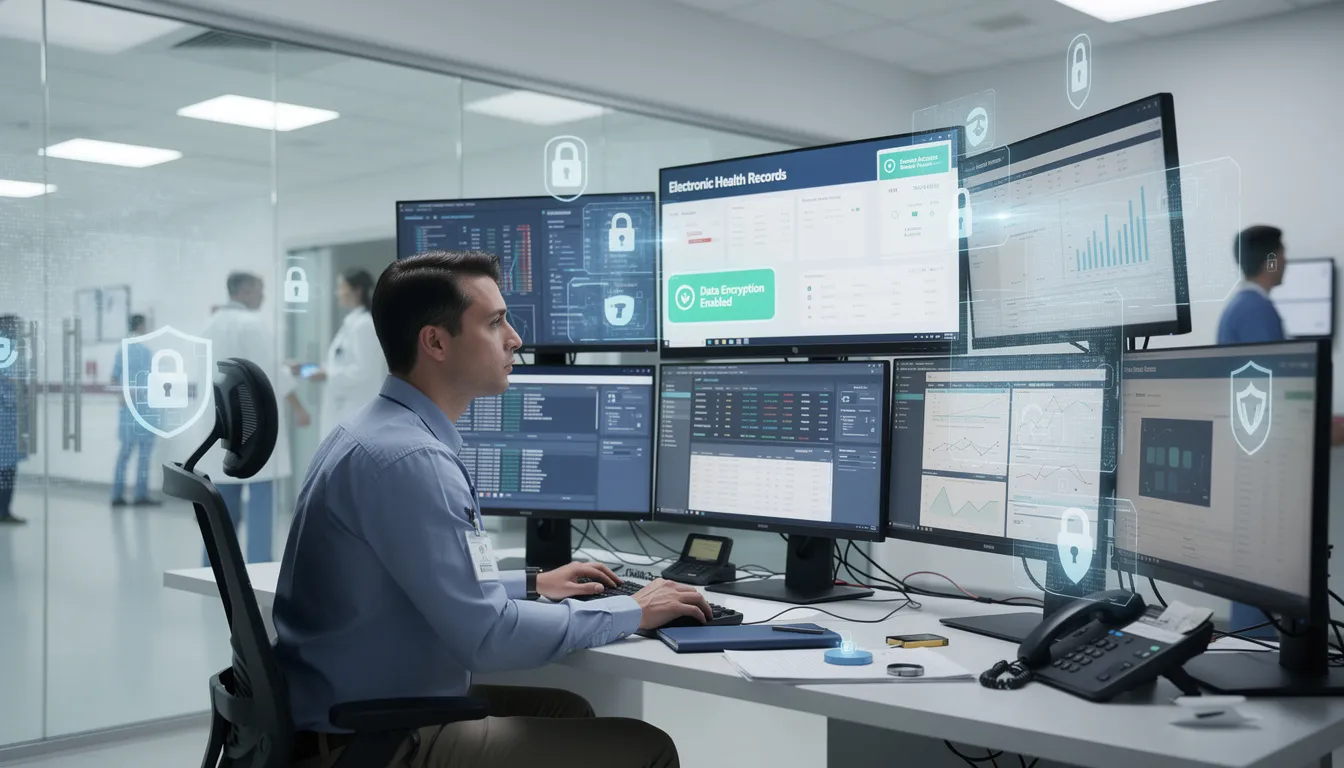
Technical safeguards encompass access control mechanisms that ensure only authorized personnel can access electronic protected health information systems. This includes implementing unique user identification, emergency access procedures, automatic logoff features, and encryption protocols where appropriate.
Audit controls must be implemented to record and examine access and other activity in information systems containing ePHI. These controls enable healthcare organizations to track who accessed which information and when, supporting both security monitoring and compliance demonstration efforts.
Integrity protections prevent unauthorized alteration or destruction of ePHI, while transmission security measures protect ePHI during electronic transmission over networks. Organizations must implement appropriate safeguards to prevent unauthorized access during data transmission, often through encryption technologies and secure transmission protocols.

Covered Entities and Business Associates
Understanding the scope of hipaa coverage requires distinguishing between covered entities and business associates, as both categories have specific compliance obligations and potential liability for violations.
Covered entities include healthcare providers who conduct electronic transactions in connection with standard healthcare operations, health plans serving 50 or more participants, and healthcare clearinghouses that process health information between different formats. Healthcare providers encompass a broad range of entities, from individual physicians and medical centers to large hospital systems and specialized treatment facilities.
Health plans include health insurance coverage providers, health maintenance organizations, government health programs like Medicare and Medicaid, employer-sponsored group health plans, and other entities that pay for healthcare services. Healthcare clearinghouses serve as intermediaries that convert health information between different formats or standards.
Business associates are third-party vendors that handle protected health information on behalf of covered entities. This category has expanded significantly and now includes electronic health record platforms, billing companies, cloud service providers, medical device manufacturers that store health data, transcription services, and various technology vendors serving the healthcare industry.
The relationship between covered entities and business associates requires formal Business Associate Agreements (BAAs) that outline specific hipaa compliance responsibilities for vendors. These legally binding contracts must specify how protected health information will be safeguarded, used, and disclosed, along with requirements for reporting breaches and returning or destroying PHI when services end.
Both covered entities and business associates face direct liability for hipaa violations and must implement appropriate administrative, physical, and technical safeguards. This shared responsibility model ensures comprehensive protection across the entire healthcare data ecosystem, from primary care providers to supporting technology infrastructure.
HIPAA Breach Notification Rule
Effective September 23, 2009, the Breach Notification Rule establishes specific requirements for notifying patients, health and human services officials, and the public when breaches of unsecured protected health information occur. These notification requirements create transparency around privacy incidents while enabling affected individuals to take protective actions.
Healthcare organizations must notify patients within 60 days of breach discovery when incidents affect 500 or more individuals. For breaches involving fewer than 500 people, organizations must maintain a log and submit annual reports to the Department of health and human services by March 1st of each year.
Large breaches affecting 500 or more individuals require immediate notification to health and human services officials and may require media notification to warn the public of potential privacy risks. These public notifications often receive significant media attention and can impact organizational reputation and patient trust.
The rule defines a breach as an impermissible use or disclosure of protected health information that compromises the security or privacy of the information, subject to specific risk assessment factors. Organizations must evaluate whether unauthorized access, acquisition, use, or disclosure of PHI creates more than a low probability of compromise to determine if notification requirements apply.
Breach risk assessments must consider factors including the nature and extent of protected health information involved, whether unauthorized persons actually accessed or acquired PHI, the likelihood that PHI was actually acquired or viewed, and the extent to which risk has been mitigated. This analysis helps determine whether specific incidents constitute reportable breaches requiring notification.
Organizations can avoid breach notification requirements by ensuring protected health information is secured through encryption or other recognized protection methods. When PHI is properly encrypted according to established standards, unauthorized access incidents may not trigger notification obligations, making encryption a critical risk mitigation strategy.

Essential HIPAA Compliance Requirements
Achieving and maintaining hipaa compliance requires implementing comprehensive programs addressing privacy protection, security safeguards, and ongoing risk management. Healthcare organizations must establish systematic approaches covering policy development, workforce training, risk assessment, and incident response capabilities.
All healthcare organizations must conduct annual risk assessments to identify vulnerabilities in protected health information handling and storage systems. These assessments should evaluate administrative, physical, and technical safeguards while identifying potential threats and developing remediation plans to address identified deficiencies.
Written privacy policies and procedures must cover all aspects of protected health information use and disclosure, patient rights, workforce training requirements, and incident response protocols. These policies should reflect current operations and be updated regularly to address changes in technology, regulations, or organizational structure.
Employee training programs must ensure all workforce members understand their responsibilities for protecting patient privacy and maintaining information security. Training should cover hipaa regulations, organizational policies, incident reporting procedures, and specific role-based responsibilities for handling protected health information.
Healthcare organizations must establish incident management procedures for detecting, investigating, and reporting potential breaches or security incidents. These procedures should include specific steps for containment, assessment, notification, and remediation of privacy and security incidents.
Maintaining audit logs and access controls helps monitor protected health information access and prevent unauthorized use. Organizations should implement systems that track who accesses which information and when, enabling detection of suspicious activity and supporting compliance demonstration efforts.
All vendors handling protected health information must execute Business Associate Agreements before services begin. These contracts should specify security requirements, breach notification obligations, and procedures for returning or destroying PHI when services end.
Risk Assessment and Documentation
Healthcare organizations should conduct semi-annual self-audits to identify security gaps and vulnerabilities in their information systems and processes. These internal reviews help organizations proactively address compliance deficiencies before they result in breaches or regulatory enforcement actions.
Comprehensive documentation of all safeguards, policies, and procedures provides evidence of compliance efforts and supports regulatory reviews or investigations. Organizations should maintain current documentation reflecting actual practices rather than theoretical policies that may not align with operational reality.
Creating detailed remediation plans with specific timelines for addressing identified compliance deficiencies demonstrates organizational commitment to continuous improvement and risk reduction. These plans should prioritize high-risk vulnerabilities while establishing realistic implementation schedules.
Maintaining records of risk assessments, training completion, incident responses, and other compliance activities enables organizations to demonstrate their commitment to protecting patient privacy during regulatory reviews or breach investigations.
Employee Training and Education
All workforce members with potential access to protected health information must receive initial hipaa training upon hire, regardless of their specific role or level of PHI exposure. This foundational training ensures everyone understands basic privacy principles and organizational expectations for information protection.
Annual refresher training is required to maintain compliance awareness and address regulatory updates or changes in organizational policies and procedures. This ongoing education helps reinforce privacy protection principles while keeping workforce members informed about evolving threats and best practices.
Training programs must cover PHI handling procedures, patient rights under the Privacy Rule, minimum necessary standards for information access and disclosure, and procedures for reporting suspected privacy or security incidents. Content should be tailored to specific roles while ensuring comprehensive coverage of compliance requirements.
Employees must provide written attestation of their understanding and agreement to comply with organizational hipaa policies and procedures. This documentation creates accountability and provides evidence of training completion for compliance demonstration purposes.
Specialized training may be required for roles with elevated protected health information access, such as information technology staff, privacy officers, security personnel, and clinical leaders. These individuals often have broader access to ePHI and greater responsibility for implementing and maintaining compliance programs.
Organizations should document all training activities, including attendance records, training content, and employee acknowledgments. This documentation supports compliance demonstration and helps identify workforce members who may need additional training or support to meet their privacy protection responsibilities.
HIPAA Violations and Penalties
Civil penalties for hipaa violations range from $137 to $2,067,813 per violation, depending on the level of culpability and whether violations are corrected within specified timeframes. The Department of health and human services Office for Civil Rights has established a tiered penalty structure that considers factors such as knowledge of the violation, organizational response, and history of prior violations.
Criminal penalties can include fines up to $250,000 and imprisonment up to 10 years for willful violations involving personal gain, malicious harm, or commercial advantage. The Department of Justice pursues criminal cases when violations involve intentional misconduct or knowing disregard for patient privacy rights.
Common violations include unauthorized disclosure of protected health information to family members, friends, or unauthorized personnel; lost or stolen unencrypted devices containing ePHI; inadequate access controls allowing workforce members to access information beyond their job requirements; and failure to provide patients with timely access to their medical records.
The HHS Office for Civil Rights has received over 350,000 hipaa complaints since 2003, demonstrating the significant volume of potential privacy concerns in healthcare settings. While many complaints are resolved through voluntary compliance efforts, serious violations may result in formal investigations and enforcement actions.
Recent enforcement actions have resulted in settlements exceeding $16 million for major healthcare systems that failed to implement adequate safeguards or properly respond to breaches. These high-profile cases demonstrate regulatory commitment to enforcing compliance requirements and deterring future violations.
Organizations can reduce violation risk by implementing comprehensive compliance programs, conducting regular risk assessments, maintaining current policies and procedures, providing effective workforce training, and promptly investigating and addressing potential privacy or security incidents.
Impact on Healthcare Operations
HIPAA implementation has standardized privacy practices across healthcare organizations, reducing inconsistencies in patient data handling while establishing nationwide baseline protections for sensitive health information. This standardization has improved patient confidence in healthcare privacy protection and enabled more consistent approaches to information sharing.
Research activities face additional barriers due to informed consent requirements and restrictions on protected health information use without authorization. Researchers must navigate complex requirements for de-identification, limited data sets, or individual authorizations, which can increase study costs and complexity while potentially limiting research scope.
Healthcare providers report increased administrative costs for compliance training, policy development, and system security upgrades necessary to meet hipaa requirements. These investments in privacy and security infrastructure have improved overall information protection but represent significant ongoing expenses for healthcare organizations.
Patient trust in the healthcare system has improved due to enhanced privacy protections and transparency requirements that give individuals greater control over their health information. Patients now have legally enforceable rights to access their records, request corrections, and receive information about how their data is used and disclosed.
Electronic health record adoption accelerated partly due to hipaa security standards driving technology improvements and standardization efforts. The Security Rule’s requirements for safeguarding electronic protected health information contributed to development of more secure health information systems and better cybersecurity practices across the healthcare industry.
The standardization of electronic transactions and code sets under the Administrative Simplification provisions has reduced administrative costs and improved efficiency in claims processing, eligibility verification, and other routine healthcare operations. Health insurance plans, healthcare providers, and clearinghouses now use common standards that facilitate interoperability and reduce transaction costs.
Current HIPAA Developments
In June 2024, health and human services issued new reproductive health privacy protections limiting law enforcement access to sensitive health information related to reproductive healthcare services. These protections strengthen existing privacy safeguards while addressing contemporary concerns about privacy protection in politically sensitive healthcare areas.
Telehealth expansion during the COVID-19 pandemic required temporary enforcement discretion while permanent telemedicine privacy standards continue developing. Healthcare organizations rapidly adopted video conferencing and remote monitoring technologies, creating new challenges for protecting patient privacy during virtual care delivery.
Artificial intelligence and machine learning applications in healthcare require careful hipaa compliance consideration for protected health information processing, model training, and automated decision-making systems. These emerging technologies create new opportunities for improving patient care while presenting novel privacy and security challenges.
State privacy laws like California’s Consumer Privacy Act create additional compliance requirements beyond federal hipaa standards, particularly for healthcare organizations that also handle non-PHI personal information. These overlapping regulatory frameworks require careful analysis to ensure comprehensive compliance across different legal requirements.
Ransomware attacks on healthcare systems have increased scrutiny of cybersecurity safeguards and breach notification procedures. Recent attacks have affected millions of patient records and resulted in significant operational disruptions, highlighting the need for robust security measures and incident response capabilities.
The rise of consumer health applications, wearable devices, and direct-to-consumer health services has created new categories of health-related data that may fall outside traditional hipaa coverage. This regulatory gap leaves consumers with potentially fewer protections for health information collected by non-covered entities.
Cloud computing adoption in healthcare continues expanding, requiring careful attention to business associate agreements, data location requirements, and shared responsibility models for protecting electronic protected health information in cloud environments. Healthcare organizations must ensure cloud service providers implement appropriate safeguards while maintaining visibility into security practices.
Healthcare organizations that proactively address hipaa compliance requirements position themselves for success in an increasingly complex regulatory environment. By implementing comprehensive privacy and security programs, maintaining current policies and procedures, and fostering cultures of privacy protection, these organizations build patient trust while reducing regulatory risk.
The ongoing evolution of healthcare technology, changing regulatory requirements, and emerging privacy challenges require continuous attention to compliance program effectiveness. Organizations that treat compliance as an ongoing process rather than a one-time initiative are better prepared to adapt to future changes while maintaining strong patient privacy protection.
Whether you’re a healthcare provider, work for a healthcare organization, serve as a business associate, or support the healthcare industry in other ways, understanding and implementing appropriate hipaa safeguards protects patients, reduces legal risk, and supports the fundamental goal of maintaining trust in our healthcare system. The investment in proper compliance programs pays dividends through reduced breach risk, improved operational efficiency, and enhanced patient confidence in privacy protection.